
Knife Hit
KetchappArcade
4.215.02K Reviews
- Version
- 1.8.32
- Installs
- 100.00M
- Age Rating
- Everyone
Screenshots
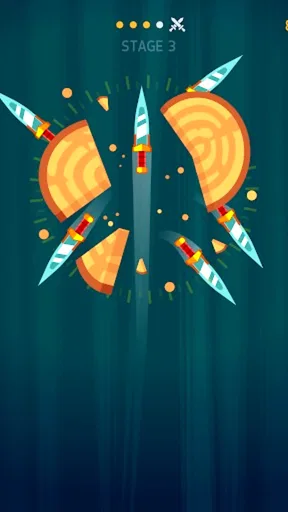
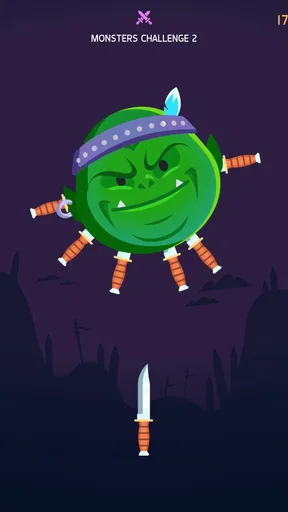
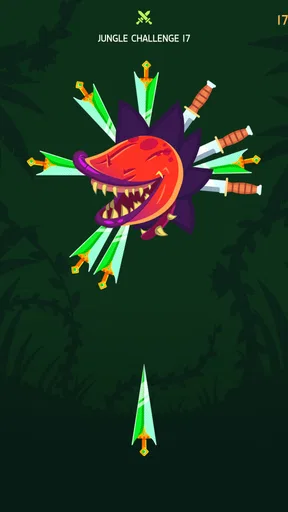
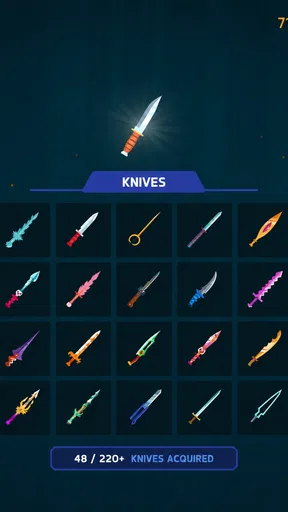
Our Review of Knife Hit
 Analysis by Appyee
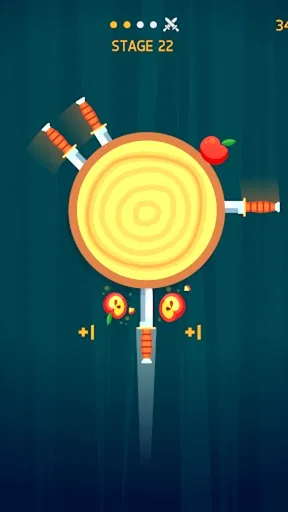
When I have a spare minute and want a challenge that needs my attention rather than a long setup, I reach for a game built around one clear action: judging a moving target and tapping at the right moment. That is the appeal of Knife Hit. It asks me to throw knives at a rotating log, fit them into open spaces, and avoid the blades already stuck there. The idea is easy to understand, but a small timing mistake can undo a run, which gives even a short session a satisfying edge.
Small goals that make each run feel worthwhile
The first goal is immediate: place the knives you have been given without letting one collide with another. Apples on the target add something to watch for as well, so I am not simply tapping as fast as possible. I need to read the spacing, notice how the log is moving, and decide whether to throw now or wait for a safer opening. That clear, local objective makes the game easy to pick up while still giving each attempt a little tension.
Those early successes are useful practice, not a promise that every later level will feel the same. As the layouts become less forgiving, I find myself paying attention to the gaps left by earlier throws. A good habit is to look at the whole target before beginning a sequence rather than focus only on the next tap. It helps me avoid committing to a quick rhythm when the available spaces call for patience.
What progress feels like from one level to the next
In this arcade game from Ketchapp, progress is easiest to feel in my own decisions. I get better at recognizing when a gap is about to pass, and I become less likely to panic when the target changes direction. The visible reward is completing a level and moving on; the more personal reward is noticing that I can handle patterns that used to catch me out. Knife designs you can unlock offer another reason to continue, though I see them as a pleasant extra rather than the main test of skill.
The game has a 4.2 average from around 1.2 million ratings, and it has passed 100 million installs. Those figures suggest it has broad appeal, but they do not tell me whether its particular rhythm will suit you. I would pay more attention to the basic loop: short attempts, one-finger controls, and a focus on timing. If that sounds satisfying, the scale of its audience is less important than whether you enjoy learning through retries.
A difficulty curve built around restraint
The tap control is simple, but the game rewards restraint more than frantic speed. The log can rotate at different speeds and change direction, so I have to keep adjusting instead of relying on a fixed beat. Missing a shot sends me back to the level, which makes each successful run feel earned. I do not find that every failure teaches an obvious lesson, though: sometimes the useful takeaway is simply to slow down and read the next opening more carefully.
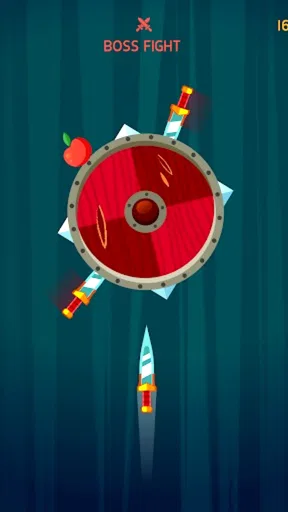
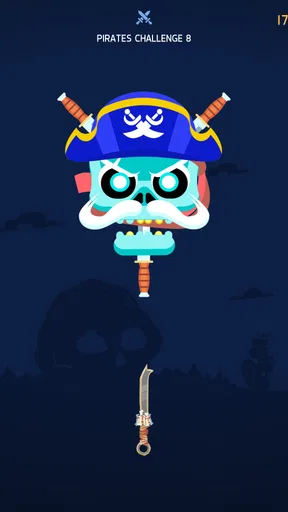
Boss encounters interrupt the regular rhythm with larger, more involved targets. They give the game a change of pace and ask for extra patience, rather than making every level feel like the same sequence of taps. When I reach one, I treat it as a reason to watch the target before throwing, not as a cue to rush because I want to get back to ordinary levels. That small adjustment makes the challenge feel more manageable.
What keeps me playing, and where the appeal can wear thin
The repeat-attempt structure is the main source of momentum. A run is short enough that restarting does not feel like a major commitment, and getting close to a clean sequence makes another try tempting. Unlockable knife designs add a modest collection goal, while beating a tricky level gives a more immediate reason to carry on. I like that these motivations are easy to understand, but they may not be enough for someone who wants a story, varied modes, or a long-term progression system with many different activities.
There is also a trade-off in the very simplicity that makes the game convenient. The core action stays focused on aiming a throw around a rotating target, so players who tire quickly of repeating a narrow mechanic may find its appeal fades. A missed attempt can feel frustrating when I have nearly cleared a level, and a quick restart is not always the same as a relaxing break. I would choose a slower puzzle game instead if I wanted time to think without the pressure of a moving target.
When it fits into an ordinary day
For me, this works best in small gaps: waiting for a friend, sitting through a short pause between errands, or taking a quick screen break before returning to a task. I can start an attempt without planning a long session, and the simple control scheme makes it easy to understand what I am doing even if I have not played for a while. The practical tip is to treat one run as the whole break rather than promise yourself an exact number of levels; the retry loop can make a spare minute stretch longer than expected.
It is less suitable when I need a game I can ignore at any moment. The target keeps moving, and a throw depends on seeing the opening, so dividing attention between the screen and another task makes success harder. It is also not my pick for someone looking for a calm idle game or a multiplayer contest. Its strength is focused, individual timing, and that same focus is the reason it can feel demanding in the wrong setting.
How it compares with other quick arcade games
Compared with an endless runner, this asks less of me in terms of steering through a changing path, but more in terms of choosing the exact instant to act. Compared with a match-style puzzle, it offers less time to plan and more pressure from the moving target. That gives it a distinctive place among quick arcade games: the challenge comes from spacing and timing, not from building a complex strategy or navigating a large world. If you enjoy short reflex tests, it is a sharper choice; if you want variety in the actions you perform, a broader arcade collection may hold your interest longer.
The presentation supports that focused loop. The visuals are clean rather than crowded, and different log designs give the targets some variety without taking attention away from the gaps. The sound effects make successful hits feel definite, while the background music stays behind the action. I find this restraint useful on a small screen: I can keep my eyes on the target instead of sorting through decorative detail. The look and sound do not transform the mechanic, but they help each attempt read clearly.
Gameplay Mechanics
Once you dive into Knife Hit, you’ll quickly realize that the key is all about timing and precision. The log spins at different speeds and changes direction, keeping you on your toes. Your goal? Throw all your knives without hitting any of the ones already there. Each level introduces unique patterns and obstacles, turning up the challenge as you progress.
The controls are refreshingly straightforward. Just tap to throw a knife. But don't let the simplicity fool you. As the levels go up, so does the intensity! Miss a shot, and you'll find yourself starting the level over again. But hey, that’s part of the thrill!
Visuals and Soundtrack
Visually, the game is clean and crisp. It doesn't overwhelm with unnecessary graphics, which is perfect for a game focused on quick reflexes and sharp vision. The logs come in various designs, keeping things visually interesting as you slice through level after level. The sound effects are spot on – the satisfying thunk of a knife hitting wood is oddly gratifying. And the subtle background music keeps your adrenaline pumping without being distracting.
Why You’ll Keep Coming Back
One word: addictive. Seriously, I’ve found myself saying “just one more level” more times than I can count. The game’s addictive nature lies in its simplicity and the continuous urge to beat your high score. It’s the kind of game that’s easy to pick up but hard to put down. Each successful throw gives a tiny rush of satisfaction, making you want to keep going.
What keeps the excitement alive is the variety of knives you can unlock. Each knife has its own unique design, and unlocking them adds a layer of motivation to keep playing. It’s always fun to see what new knife you’ll get next!
Challenges and Boss Battles
I have to mention the boss battles because they add an unexpected twist to the game. Every few levels, you’ll face a boss – a larger, more intricate target that requires extra skill and patience to conquer. These battles bring a nice change of pace and push your knife-throwing skills to the limit. They’re challenging but incredibly rewarding once you nail them.
The challenge is real, but it never feels unfair. Each level tests your reflexes and timing, and with practice, you'll find yourself improving, which is immensely satisfying.
Final Thoughts
So, should you download Knife Hit? If you enjoy quick, skill-based games that you can jump into anytime, then absolutely! It’s perfect for a short break or even a longer gaming session if you’re up for the challenge. The game strikes a great balance between being casual enough for short play sessions and challenging enough to keep you engaged for hours.
It is free to play and rated for Everyone, with in-app purchases priced from 99 cents to $19.99 per item. I would go in expecting a focused arcade game, not a purchase being necessary to understand its basic appeal. It was released on January 20, 2018, and version 1.8.30 lists Android 7.0 as the minimum operating system. Those details make it easier to judge fit before installing, especially if you are checking an older device or keeping an eye on optional spending.
In a world where games often get bogged down with complex mechanics, Knife Hit offers a refreshing, straightforward experience. It’s a reminder that sometimes the best games are the simplest ones. So go ahead, give it a shot, and see how many knives you can land!
Verdict
Strengths of Knife Hit
- Simple and addictive gameplay.
- Visually appealing graphics.
- Challenging boss levels.
- Frequent updates with new content.
- Smooth controls and mechanics.
Limitations of Knife Hit
- In-app purchases can be costly.
- Ads can be intrusive.
- Limited offline play options.
- Repetitive gameplay over time.
- Requires precise timing for success.
Other Releases by Ketchapp
View All
Rider – Stunt Bike Racing
Arcade4.3

Monster Chase
Arcade4.5

Horse Life: Foal & Ranch Care
Arcade4.7

Horse Ranch
Arcade4.5
Similar Picks in This Category
View All
Subway Surfers
SYBO Games4.6

Stickman Party 234 MiniGames
PlayMax Game Studio4.6

Subway Princess Runner
Ivy4.4

Temple Run
Imangi Studios4.2

Zombie Tsunami
Mobigame SAS4.6

Stack Ball - Crash Platforms
CASUAL AZUR GAMES4.5
Frequently Asked Questions
What is Knife Hit and how does it work?
Knife Hit is a popular arcade game where players throw knives at a rotating target, usually a log. The objective is to hit the target without hitting other knives that have already been thrown. As you progress, the speed and patterns become more challenging, requiring precision and timing.
Is Knife Hit free to play?
Yes, Knife Hit is free to download and play on both Android and iOS platforms. However, it contains in-app purchases and ads. Players can opt to buy items or remove ads for a better gaming experience. It's entirely possible to enjoy the game without spending money, but purchases can enhance gameplay.
What are the main features of Knife Hit?
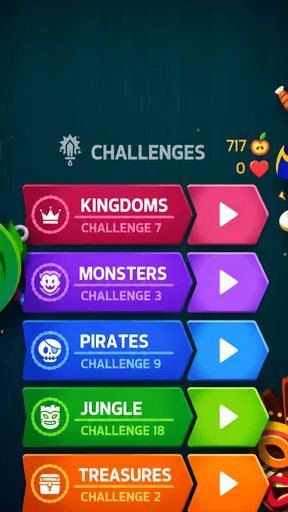
Knife Hit features simple yet addictive gameplay, with a variety of levels and bosses to defeat. The game introduces different knives and targets as players progress. It also includes daily challenges and achievements that keep the gameplay fresh and engaging, encouraging players to improve their skills.
Can I play Knife Hit offline?
Yes, Knife Hit can be played offline, making it an excellent choice for users who want to enjoy the game without an internet connection. However, some features, like ads removal or in-app purchases, require a connection. Offline play ensures uninterrupted gameplay during travel or in areas with poor connectivity.
What are some tips for succeeding in Knife Hit?
Success in Knife Hit involves precise timing and strategy. Players should focus on hitting open spots and avoiding previous knife placements. Observing the rotation pattern and speed of the target helps in planning throws. Practicing regularly and participating in daily challenges can significantly improve skill levels.
Play our best games!


